Ask any zoo or aquarium veterinarian what the hardest part of their job is, and diagnostic imaging will usually come up towards the top of the list. The problem is rarely a lack of clinical skill; it is logistics. A 650-pound Bengal tiger, a green sea turtle, or a herd of giraffes cannot simply be walked down the hall to a radiology suite the way a dog or a house cat can.
For decades, the default solution was to bring the animal to the imaging equipment regardless of the logistical obstacles above. That meant sedation, crating, transport, and a fixed X-ray room designed more for human patients than for the extraordinary range of species a modern zoological facility cares for. Every one of those steps adds risk. Anesthesia carries real danger for exotic and marine species, many of whom have narrow physiological margins and poorly understood drug responses. Transport adds stress that can undo months of careful behavioral conditioning. And for some animals, from cheetahs to birds of prey with fragile skeletal structures, moving them to a diagnostic suite is simply not a safe option at all.
Instead of making animals fit the workflow of a conventional hospital, zoological veterinarians are rethinking the workflow itself. The goal is no longer to bring the patient to the X-ray machine, it is to bring the X-ray machine to the patient.
Meeting the Animal Where It Lives
Progressive zoos and aquariums have spent years training animals for voluntary participation in their own healthcare, using operant conditioning to get elephants to present a foot, primates to present a limb, or big cats to hold still at a training station for a few seconds of contact. That investment in trust and training only pays off if the diagnostic tool can show up at the barn, the exhibit, or the poolside deck rather than demanding the animal be moved to it.
This is where portable radiography earns its place as core equipment rather than just a backup option. A portable X-ray machine that can be wheeled directly to an enclosure lets a veterinary team capture diagnostic images during a routine keeper interaction, with no sedation and no transport crate involved. A reptile with a suspected fracture can be imaged in its own enclosure in natural light and temperature. A dolphin or sea lion can be imaged poolside during a scheduled medical behavior session rather than only during an emergency response. Keepers stay present throughout, which keeps stress signals recognizable and the whole process calmer for everyone involved, animal and staff alike.
There are practical demands that come with this kind of work, and they are different from the demands of a veterinary hospital radiology department. Imaging may take place in barns, aviaries, marine facilities, or outdoor habitats where conditions are far less predictable than in a controlled clinical setting. Equipment needs to deliver consistent performance in dusty, humid, and demanding environments while providing the image quality and penetration required to examine patients ranging from a finch to an elephant.
Built for the Range Zoological Medicine Actually Requires
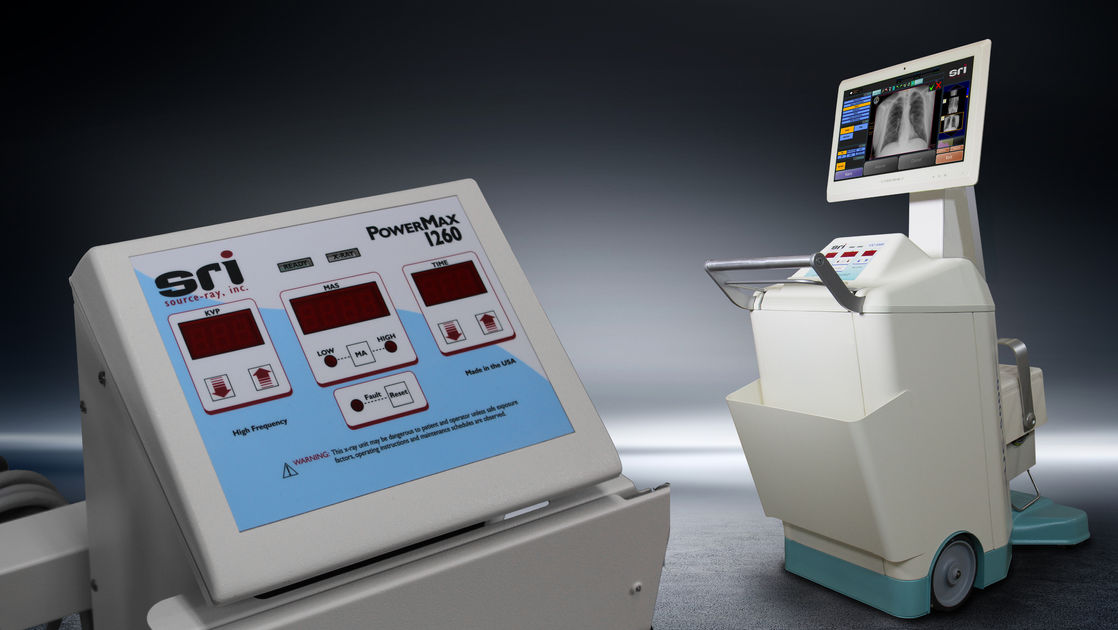
This is precisely the gap that portable radiography was designed to close, and it's why Source-Ray's line of portable systems tends to come up so often in zoological and exotic veterinary circles. The SR-115 is built for lighter fieldwork, ideal for smaller mammals, birds, and reptiles where a compact, agile, and easy-to-maneuver form factor matters. The SR-130 steps up in power for mid-sized species and general veterinary field use, offering the flexibility most zoo hospitals need for day-to-day casework. And for the largest patients, the PowerMax 1260 delivers the higher output required to image dense anatomy like an elephant’s limb or a leopard’s pelvis without needing a fixed installation.
None of these were designed with a stethoscope-and-waiting-room clinic in mind. They were designed for exactly the environment zoological medicine actually operates in: enclosures instead of exam rooms, habitats instead of hallways, and patients who were never going to walk themselves to a radiology suite in the first place. For the veterinarians and zookeepers doing that work every day, having imaging that comes to them rather than the other way around is not a convenience. It is what makes safe, low-stress diagnostic care possible at all.