In combat medicine, decisions aren’t made in quiet rooms with time to double-check assumptions. They’re made on the move, under pressure, with limited hands, unstable power, and injured people waiting. Clinicians are expected to act fast, stay accurate, and adapt constantly. In those moments, diagnostic imaging isn’t a luxury. It’s a way to reduce uncertainty when uncertainty is everywhere.
That’s why mobile and portable X-ray systems play such a critical role in military medicine. They allow medical teams to bring imaging to the patient, rather than the other way around, supporting care that keeps pace with the realities of the battlefield.
When mobility matters as much as accuracy
Battlefield injuries are rarely clean or predictable. A patient may appear stable, but swelling, adrenaline, or noise and confusion can mask serious health risks. Fractures, shrapnel injuries, blast effects, or chest trauma aren’t always obvious from a physical exam alone, especially when clinicians are managing multiple critical patients at once.
A portable X-ray system gives providers immediate visual confirmation at the point of care. A mobile X-ray unit can be rolled into a trauma lane, resuscitation area, or treatment bay, allowing teams to confirm injuries without delaying care or moving the patient. That mobility reduces risk, preserves monitoring, and helps clinicians act with confidence rather than hesitation.
Designed for how combat medicine actually works
Military field hospitals are built to move and adapt. Spaces change, patient flow shifts, and care zones expand or contract depending on the situation. Mobile X-ray systems fit into that reality because they don’t depend on fixed rooms or rigid workflows. Portable imaging allows teams to respond where the need is, not where the equipment happens to be.
In high-acuity situations, suspected head trauma, thoracic injuries, and complex extremity wounds, having portable and mobile X-ray capability close at hand can be the difference between waiting and acting. Imaging becomes part of the clinical rhythm rather than a separate step.
From a practical, human standpoint, mobile and portable imaging supports:
In rapid triage, when mobile X-ray access helps prioritize care
More confident assessment of penetrating injuries, including foreign body localization
Chest and extremity imaging at the bedside, using portable X-ray systems without interrupting stabilization
Smoother patient flow, as mobile X-ray reduces bottlenecks and unnecessary transport
Immediate digital image review, allowing teams to make decisions without delay
These aren’t abstract advantages. They shape real outcomes: who returns to duty, who needs surgery now, and who must be stabilized before medical evacuation.
Mobile imaging and the hardest decisions in the field
One of the most difficult calls in combat medicine is deciding when a patient is ready to move. Evacuation is essential, but every transfer introduces risk. Portable X-ray imaging supports safer stabilization by confirming injuries, guiding immobilization, and helping teams anticipate complications before movement.
Mobile X-ray systems also improve communication. When images can be acquired and reviewed quickly at the point of care, handoffs become clearer and more precise. In military medicine, where patients often pass through multiple teams and locations, that clarity matters.
Imaging equipment that moves with the people using it
For mobile and portable X-ray systems to be effective in a deployed environment, they have to work without friction. They must be easy to position, intuitive to operate, and reliable even when power is unstable and conditions are far from ideal. When imaging equipment slows clinicians down, it becomes a burden. When it moves easily and works consistently, it becomes an integral part of the team.
Imaging that earns its place on the battlefield
The real value of mobile and portable X-ray systems in combat medicine isn’t about advanced features or polished technology. It’s about giving clinicians better footing in moments where the margin for error is thin. Portable imaging at the point of care supports faster decisions, safer treatment, and smoother medical planning when chaos is the norm.
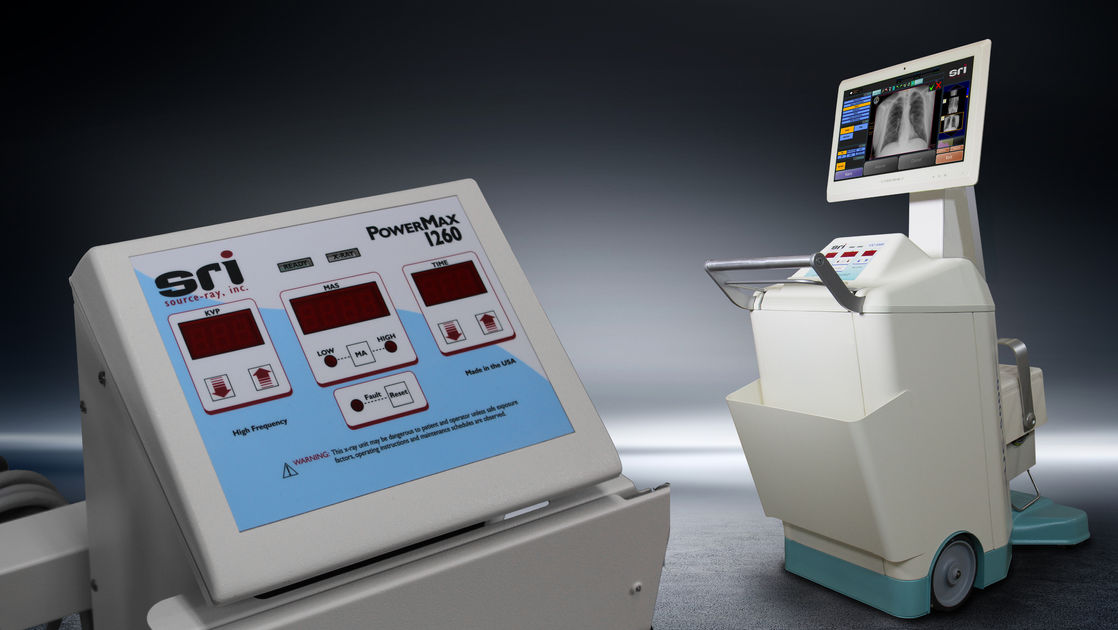
This is why systems like Source-Ray’s PowerMax 1260 portable X-ray system were designed to be rugged and durable. Built for deployed environments, the PowerMax 1260 portable X-ray system was originally designed for military applications, with the realities of deployed care in mind, with its universal input with power factor correction enabling it to plug into any standard power outlet around the world. It also has the unique capability of operating on an unstable power source, which can sometimes be common in many combat zones.
Paired with a purpose-built military transport case, the system is better prepared for repeated deployment cycles, rough handling, and harsh field conditions. In modern military medicine, the most valuable tools aren’t the ones that demand attention; they’re the ones that move easily, endure quietly, and support the people making life-critical decisions every day.