In late 2025, a California poultry establishment recalled roughly 3.96 million pounds of chicken corn dog products after pieces of wood were found embedded in the batter. The problem was not caught on the line. It surfaced when a consumer complained about an injury, and by then the product had shipped nationwide, including to schools and institutional buyers.
That is what a physical contamination failure looks like at scale, and it is not an outlier. Across USDA Food Safety and Inspection Service recalls from 2012 to 2023, extraneous material accounted for around 15 percent of recall incidents; on the FDA side, foreign objects accounted for about 7 percent. Physical hazards sit alongside pathogens and allergens as one of the three things that pulled products off shelves.
The regulatory threshold is more specific than most people expect
FDA Compliance Policy Guide 555.425 sets out where the line falls. Between 1972 and 1997 the agency's Health Hazard Evaluation Board reviewed roughly 190 cases of hard or sharp foreign objects in food and concluded that objects under 7 mm at their maximum dimension rarely cause serious trauma, except in special risk groups such as infants, surgical patients, and the elderly. Objects measuring 7 mm to 25 mm in ready-to-eat food, or food needing minimal preparation, meet the criteria for direct regulatory action.
That gives inspection a concrete target rather than an aspiration, and under both HACCP and the FSMA Preventive Controls for Human Food rule the control has to be validated, monitored, and documented.
Why X-ray, and where it beats metal detection
X-ray inspection works on density. As the beam passes through a package, denser material absorbs more of it, and the detector converts what gets through into a greyscale image. Anything appreciably denser than the surrounding food shows up dark.
That covers a far wider range of contaminants than an electromagnetic metal detector: metal of any type, glass, stone, calcified bone, and high-density plastics and rubber. It also works through metallized film, foil, and cans, where metal detectors are effectively blind, and it is not defeated by the salt and moisture that causes product effect in wet or brined products. The same pass can verify fill level, check mass, and flag missing or broken product.
It is not universal. Soft bones, such as a chicken keel bone, generally will not show, and light soda glass is harder to see than dense lead crystal. Detectability depends on the contaminant's density and composition relative to the product around it, which is why validation on the actual product matters more than a headline sensitivity figure.
What the production line demands of the source
Food inspection uses line-scan geometry: the product travels on a conveyor while a detector array reads it line by line. Published application data puts the working range in context. As a general example, detecting residual bone in chicken breast runs at around 100 kV and 8 mA at a belt speed of 10 meters per minute; thinner products such as hash browns, where the target is rubber and glass fragments, run closer to 90 kV. Commercial systems commonly specify generators in the 200 to 500 watt class.
The kV numbers are modest by industrial standards. The duty cycle is not. This is continuous operation, every package, every shift, in an environment built around high-pressure washdown and sanitation chemicals, where enclosures are routinely inspected.
Stability is what turns that into food safety control rather than a camera. Rejection decisions are greyscale threshold decisions, and if tube voltage drifts, the beam spectrum shifts, attenuation contrast changes, and a threshold set during validation no longer means what it meant when it was signed off. The failure is quiet in both directions: false rejects that bleed yield or a contaminant that no longer crosses the line.
The radiation question, answered plainly
X-rays here are generated electrically and stop the instant the tube is off. Under 21 CFR 1020.40, a cabinet X-ray system must not emit more than 0.5 milliroentgen in one hour at any point 5 cm from its external surface. The dose reaching the food is on the order of 0.2 mGy per pass, thousands of times below the 0.5 Gy ceiling FDA has assessed as inducing no detectable radioactivity. Inspection is not irradiation; the two are separated by orders of magnitude.
Specifying the generator
For OEMs building food inspection systems, the generator has to hold regulated output across long continuous shifts, survive a washdown environment, fit a sanitary envelope, integrate with conveyor control and rejection logic, and carry the interlocks and certification the cabinet standard requires.
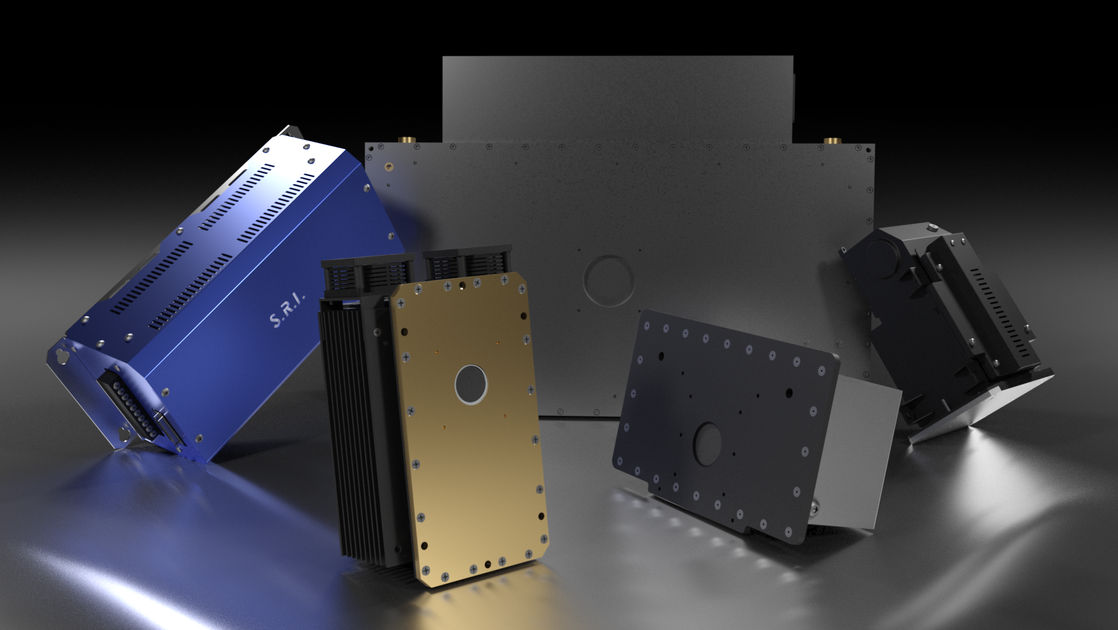
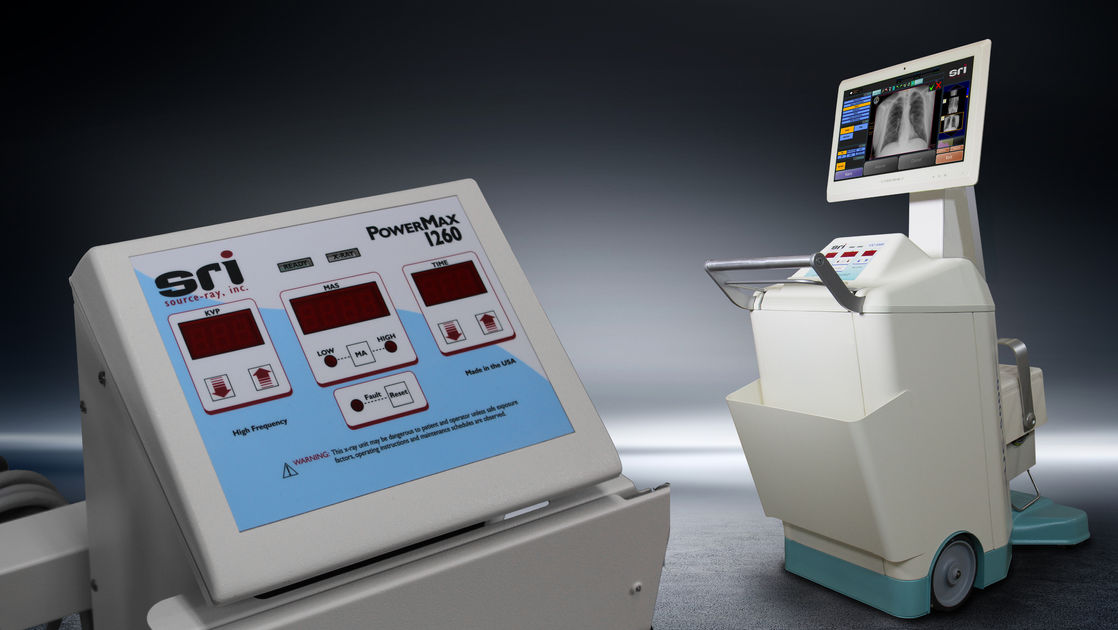
Source-Ray designs and manufactures high-frequency X-ray generators in modular and fully integrated X-ray sources, including custom builds developed around an OEM's mechanical, control, and regulatory requirements. If you are developing a food inspection platform or chasing threshold drift in a fielded one, talk to our engineering team about what the line actually demands.